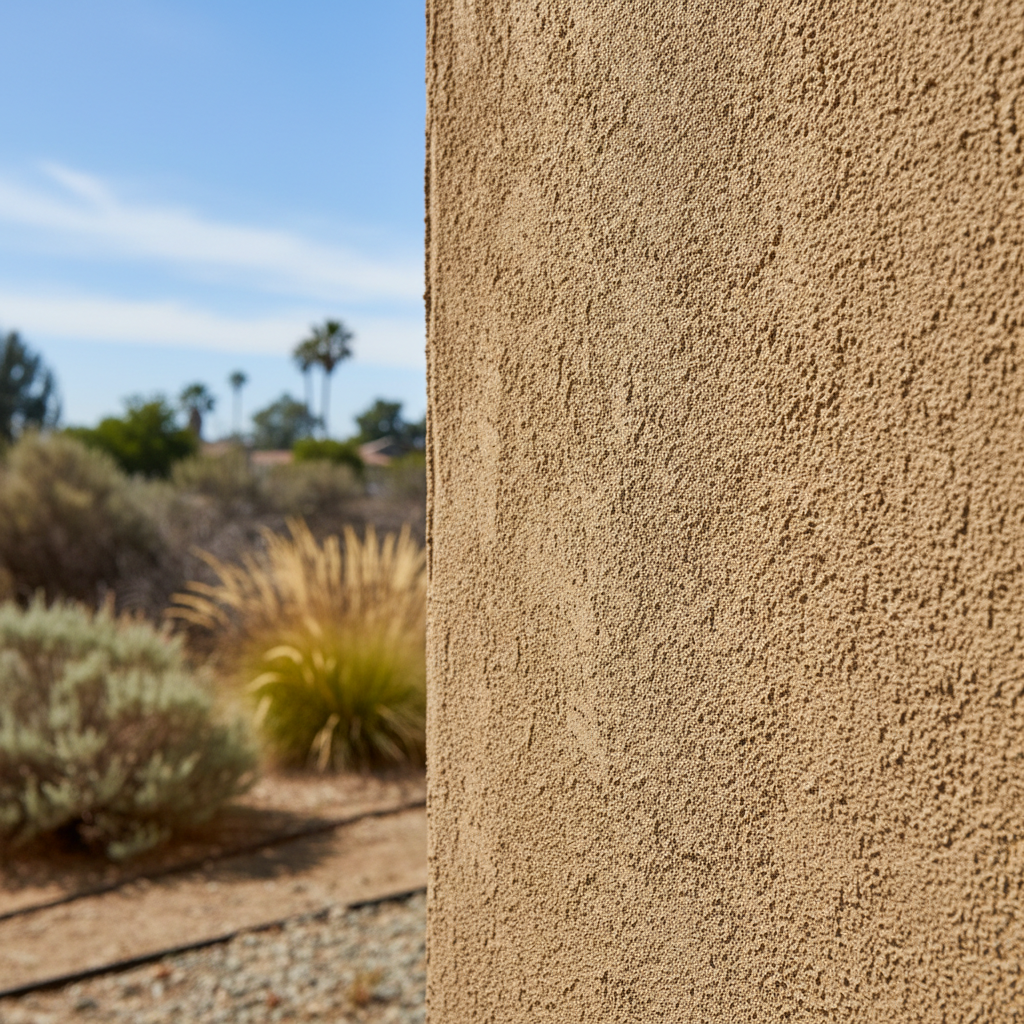
Ever walked around your house and noticed a jagged line creeping across the wall? Stucco is tough, but between the dry Bay Area heat and our occasional heavy winter rains, the material takes a beating. Santa Clara Stucco & Plastering tells homeowners around the Old Quad and Westwood neighborhoods that catching minor issues early saves you thousands of dollars down the road. You do not need a degree in construction to keep an eye on your exterior, but you do need to know what separates a weekend DIY check from a call to the pros.
Before You Start: Getting Your Eyes Ready
Grab a notebook and a bright flashlight, and pick a dry morning when the sun hits your walls at an angle. That oblique light is very helpful for exposing micro-cracks and bulges. Before you start poking around, take a quick walk around the perimeter and look up at the eaves and flashings. Water is stucco's number one enemy, and if the roof or gutters are dumping water down the face of your walls, you are going to find damage.
What You Can Do Yourself
You can handle the initial visual sweep easily. Walk right up to the walls and look for hairline cracks, which are usually less than the width of a credit card. These happen naturally as houses settle in our local adobe clay soil. Check around window frames and door casings where sealants tend to shrink and crack over the years. Tap gently on suspicious spots with the handle of a screwdriver. A solid, crisp sound means the stucco is bonded tight to the lath. If it sounds hollow or papery, you have got a debonding issue.
- Look for white, powdery residue called efflorescence, which signals moisture moving through the wall.
- Inspect the bottom six inches near the soil line to make sure dirt is not bridging your weep screed.
- Check for rust stains bleeding through the finish coat, which means metal lath is rusting inside.
When to Call Santa Clara Stucco & Plastering
There is a hard line between maintenance and structural trouble. If you find cracks wider than a nickel, or areas where chunks of the brown coat are missing, put the screwdriver down and step away. Staining that stays damp days after a rainstorm means water is trapped behind the barrier. Santa Clara Stucco & Plastering brings moisture meters and thermal imaging to find out where that water is traveling. DIY patching over active moisture just traps it inside, rotting your framing studs before you even notice.
After the Inspection: Making Your Move
Once you have mapped out your walls, prioritize what needs immediate attention. Hairline cracks can often be sealed with a quality elastomeric caulk if you are comfortable on a ladder. Anything involving hollow spots, crumbling corners, or systemic staining needs professional remediation. Fixing a small patch now beats replacing an entire wall section later. Keep an eye on your exterior twice a year, and your home will stay solid through every season our valley throws at us.